
_
Zaid Jaloudi

The spring of 2024 marked a watershed in the history of American higher education and political activism. Across the United States, university campuses—long regarded as sanctuaries of free inquiry and democratic engagement—became epicentres of a profound moral and political reckoning. The catalyst was the ongoing Israeli assault on Gaza, broadcast in real time through social media and news outlets. The images of bombed hospitals, razed neighbourhoods, and children killed in their homes were not distant abstractions; they were immediate, visceral, and implicated American institutions directly. For countless students, the knowledge that their universities were financially entangled with companies profiting from the violence in Gaza transformed outrage into a personal and institutional crisis.
In response, an unprecedented wave of student activism swept the nation. Students, faculty, and staff mobilised to demand that their universities divest from Israel and from corporations complicit in Israeli occupation, apartheid, and genocide. The central demand was clear: institutions of higher learning must not profit from, or be complicit in, the machinery of oppression and systematic human rights violations. This movement was not an isolated or fringe phenomenon; it was broad, intersectional, and deeply rooted in longstanding traditions of campus protest and solidarity.
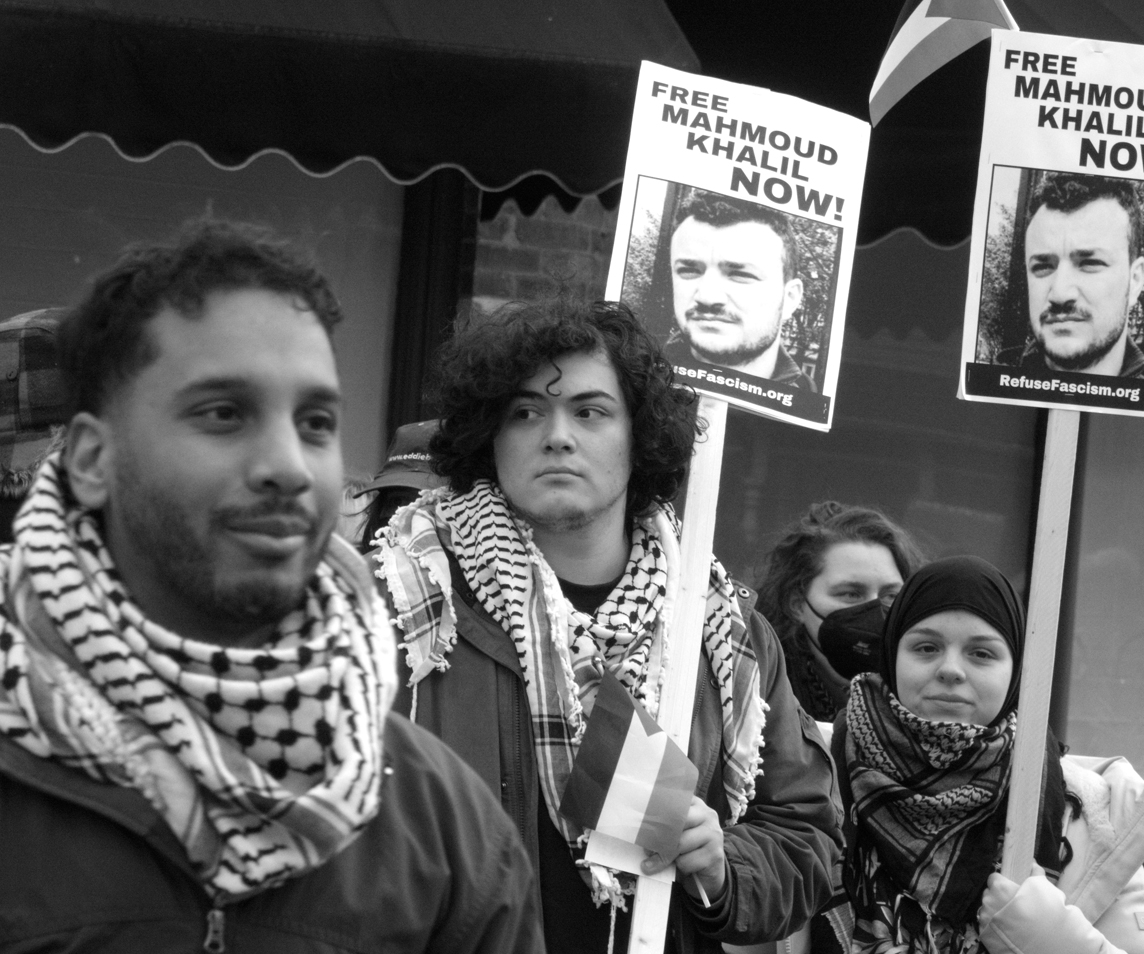
This article situates the current wave of pro-Palestinian activism within the broader legacy of student protest in the United States. It interrogates the bipartisan machinery that has criminalised dissent, exposes the complicity of universities and the U.S. government in eroding fundamental freedoms on behalf of Zionism, and analyses the implications for academic freedom, free speech, and democratic governance. Drawing on historical analysis, recent events, legal frameworks, and case studies, I argue that the struggle for Palestinian rights is inseparable from the struggle for democracy and justice in the United States. The criminalisation of pro-Palestinian solidarity is not merely a campus issue; it has been a test case for the future of dissent and the integrity of American institutions.
U.S. Legacy of Student Activism and the Roots of Pro-Palestinian Activism
The American university has long served as a crucible for dissent, social transformation, and the contestation of power. From the 1930s, when students at Columbia and other institutions organised against fascism and for academic freedom, to the Free Speech Movement at the University of California, Berkeley in the 1960s, students and the youth have repeatedly forced the nation to confront its complicity in war, racism, and injustice. The anti-Vietnam War protests, the civil rights sit-ins, and the woman’s rights movements all found their epicentres on college campuses.
These movements were not mere symbolic gestures; they achieved substantive victories. Student activism was instrumental in forcing universities to divest from companies supporting Apartheid South Africa, pressuring the government to end the war in Vietnam, and in expanding civil rights protections for marginalised groups. Yet, these victories were won in the face of fierce repression: surveillance by the FBI’s Counter Intelligence Program (COINTELPRO), police violence, blacklisting, and administrative crackdowns. The university has always been a contested space—a site of both emancipatory possibility and institutional control.
While often symbolic, these votes reflected a growing consensus that universities should align their investments with human rights and international law. Yet, university administrations routinely ignored or actively undermined these efforts, citing legal, financial, or reputational risks. In some instances, student groups such as Students for Justice in Palestine (SJP) were suspended or banned, and activists faced harassment and doxxing.
The 2010s and early 2020s saw student government referendums and votes for divestment become regular features of campus politics. At institutions such as New York University, the University of Michigan, and Brown University, students and the youth organised multi-year campaigns, building coalitions and winning democratic mandates for divestment. Yet, in nearly every case, administrations either ignored or overturned these votes, invoking “institutional neutrality,” donor pressure, or legal concerns.
Administrators frequently engaged in bad-faith negotiations, promising to “consider” divestment or establish advisory committees that produced no meaningful change. Retaliation against activists intensified: SJP chapters were suspended, student leaders were targeted with doxxing campaigns, and anti-BDS laws threatened student organisations’ funding. This administrative hostility underscored the political stakes: universities prioritised donor relations and political expediency over student and faculty demands for justice.
The events of October 2023 and their aftermath marked a paradigmatic shift in the political consciousness of American university students. Unlike previous episodes of violence in the Israeli-Palestinian conflict, the devastation in Gaza was not filtered through the slow, sanitised lens of traditional media. Instead, it was rendered immediate and intimate by the ubiquity of smartphones, livestreams, and social media platforms. The direct circulation of images and testimonies from Gaza—bombed universities and hospitals, mass graves, children murdered in their homes—dissolved the geographical and psychological distance that had previously insulated many Americans from the realities of occupation and war.
This collapse of distance had profound implications for student activism. The suffering of Palestinians was no longer an abstract humanitarian issue; it became a moral emergency with direct institutional implications. Students at Columbia, UCLA, Harvard, and dozens of other universities confronted not only the horror of the violence itself but also the complicity of their own institutions-universities whose endowments were invested in weapons manufacturers, surveillance technology firms, and corporations complicit in the genocide of Gaza. The question was no longer whether to care about Palestine, but how to respond to the knowledge that one’s tuition dollars and institutional affiliations were implicated in Israel’s project of apartheid, occupation, and genocide in Palestine.
The Moral Imperative of Divestment
It is in this context that the demand for divestment assumed a new and urgent significance. Student activists, drawing on the precedents of anti-apartheid and antiwar movements, articulated divestment not as a symbolic gesture, but as a concrete ethical imperative. The call for universities to sever financial ties with Israel and its corporate enablers was grounded in international law, human rights norms, and the principle of nonviolent resistance. The movement’s demands were precise: transparency in university investments, divestment from companies complicit in occupation and war crimes, protection for Palestinian and pro-Palestinian studentsfrom harassment and doxxing, and amnesty for those targeted by disciplinary proceedings.
The escalation of protest tactics was neither spontaneous nor inevitable. Students initially pursued dialogue and engagement: drafting open letters, circulating petitions, requesting meetings with administrators, and organising educational events. These efforts were met with bureaucratic stonewalling, administrative silence, or, in some cases, outright hostility. The refusal of university leaders to engage in substantive dialogue or to address the movement’s demands forced students and collaborating protestors to escalate their tactics.
Encampments became the defining feature of the 2024 campus uprising. Inspired by the anti-apartheid shantytowns of the 1980s and the Occupy Wall Street movement, students established Gaza Solidarity Encampments on university quads and lawns. These spaces were not only sites of protest; they were laboratories of participatory democracy, mutual aid, and political education. Students organised food drives, interfaith prayers, teach-ins on the history of Palestine, and workshops on political resistance. The encampments fostered a sense of collective purpose and solidarity that transcended individual campuses and linked activists across the globe.
Administrative Intransigence and the Turn to Repression
Despite the overwhelmingly peaceful nature of the protests, university administrations responded with disproportionate and escalating repression. At Columbia University, President Minouche Shafik’s decision to call in the New York Police Department to clear the encampment set a national precedent. Similar scenes unfolded at UCLA, Harvard, the University of Michigan, and other institutions, where militarised police units were deployed to dismantle encampments, arrest students, and suppress dissent. The spectacle of riot police storming university campuses, dragging students from tents, and arresting faculty members shocked the conscience of many observers and exposed the fragility of academic freedom.
The repression was not limited to physical force. Administrators imposed mass suspensions, expulsions, and evictions from campus housing. Some students were denied their degrees just days before graduation. International students faced the added threat of visa revocation and deportation. In parallel, universities and allied organisations launched campaigns of doxxing, blacklisting, and public shaming, targeting student activists with coordinated harassment and threats.
The crisis of legitimacy facing American higher education is thus inseparable from the crisis of Palestine. The Gaza protests have revealed not only the violence of occupation abroad but also the violence of institutional power at home. In both cases, the demand for justice is met with repression; the call for dialogue is met with silence or force. The lesson is clear: when moral clarity confronts entrenched power, repression is often the first response.
Despite the scale and intensity of the crackdown, the pro-Palestinian movement has demonstrated remarkable resilience and adaptability. Students have shifted to digital organising, held off-campus teach-ins, and built networks of mutual aid to support those targeted by disciplinary or legal action. The movement’s persistence is a testament to the depth of its moral conviction and to the enduring legacy of student activism in the United States.
The Illusion of Partisan Difference and the Reality of Consensus
A critical feature of the repression of pro-Palestinian activism in the United States is its unmistakably bipartisan character. While popular narratives often frame the erosion of civil liberties and the crackdown on dissent as the province of right-wing or conservative politics, the empirical reality since October 2023 is that both major political parties have converged in their opposition to campus protest and their unwavering support for Israel. This bipartisan consensus is not theoretical; it is operationalised through policy, law enforcement coordination, and administrative action at the highest levels of government and university governance.
The majority of mass arrests, suspensions, and police interventions have occurred in states and cities governed by Democrats, including New York, California, Massachusetts, and Illinois. University presidents and administrators, many of whom publicly identify as liberals or progressives, have been at the forefront of calling in police, imposing protest bans, and enacting new speech codes. The deployment of militarised police on campuses such as Columbia, UCLA, and the University of Michigan was not an aberration but a manifestation of a deeper political alignment that transcends party lines.
Presidential rhetoric has played a legitimising role in this process. President Biden’s public statements, which have emphasised the need for “order” and condemned “violent behaviour” on campuses, have failed to affirm the rights of students to peaceful protest or to engage substantively with the underlying demands for divestment and justice for Palestine. Rather than defending academic freedom, the administration has provided political cover for university crackdowns and continued to supply military aid to Israel, even as international legal bodies and human rights organisations have raised the alarm regarding ongoing war crimes and collective punishment in Gaza.
The bipartisan nature of repression is further reinforced by the influence of donors, trustees, and pro-Israel lobbying organisations, most notably the American Israel Public Affairs Committee (AIPAC). These actors wield significant power over university governance and public policy, often conditioning financial support on the adoption of pro-Israel stances and the suppression of pro-Palestinian activism. The threat of donor withdrawal has been a decisive factor in administrative decision-making, with university leaders frequently citing concerns about fundraising and institutional reputation as justifications for punitive action against student protesters.
The influence of pro-Israel lobbying extends beyond the university. In Congress, AIPAC and allied organisations have invested millions of dollars in campaign contributions and lobbying efforts to ensure unwavering support for Israel across party lines. Politicians who have expressed solidarity with Palestinian rights or criticised Israeli policy, such as Representatives Rashida Tlaib and Ilhan Omar, have faced well-funded primary challenges and public vilification. The message to both university administrators and elected officials is clear: dissent from the pro-Israel consensus will be met with political and financial consequences.
This environment creates powerful incentives for institutions to preemptively suppress protest and to align themselves with the demands of donors and lobbyists. The result is a narrowing of the space for open debate, the marginalisation of pro-Palestinian voices, and the entrenchment of institutional complicity in occupation and apartheid.
Manufacturing Consent: Media Narratives and the Demonisation of Protest
The mainstream media has played a leading role in constructing and disseminating narratives that legitimise the repression of student protests. Coverage of campus activism has frequently emphasised “disorder,” “chaos,” and alleged threats to Jewish students, often without distinguishing between isolated incidents and the overwhelmingly peaceful character of student protests. This framing is reinforced by statements from university officials and political leaders, who routinely conflate criticism of Israeli war crimes with antisemitism and public disorder.
This process of manufacturing consent has material consequences for the rights and well-being of student activists. By equating dissent with hate speech and disorder, university administrations and political actors insulate themselves from accountability, delegitimise legitimate protest, and contribute to a broader climate of fear and self-censorship. The willingness of the media to amplify administrative talking points and to marginalise pro-Palestinian perspectives has further entrenched the narrative that protest is synonymous with extremism or violence.
A central tactic in the suppression of pro-Palestinian activism has been the redefinition and instrumentalisation of antisemitism. The adoption of the International Holocaust Remembrance Alliance (IHRA) working definition of antisemitism by numerous universities and government agencies has facilitated the conflation of criticism of Israeli war crimes with antisemitic hate speech. This definitional shift has provided a legal and normative basis for the restriction of speech, the imposition of disciplinary sanctions, and the threat of federal funding cuts—not only in the U.S. but also in civil, educational, and parliamentary institutions across the world.
The consequences of this weaponisation are multifaceted. On the one hand, it undermines the legitimacy of genuine efforts to combat antisemitism by trivialising the term and deploying it as a tool of political expediency. On the other hand, it places students and faculty in an untenable position, forcing them to choose between their ethical commitments and their academic or professional futures. The chilling effect on campus discourse is profound, as individuals and organisations self-censor to avoid accusations of bigotry and the attendant risks of disciplinary or legal action.
In sum, the machinery of suppression that has targeted pro-Palestinian student activism in the United States is the product of a complex interplay of political, economic, and cultural forces. It is sustained by a bipartisan consensus, reinforced by donor and lobbyist influence, legitimated by media narratives, and operationalised through the strategic weaponisation of antisemitism. The implications for free speech, academic freedom, and democratic governance are far-reaching and demand urgent scholarly and political attention.
Arbitrary Deportations and the Erosion of Academic Freedom
The intensification of repression against pro-Palestinian student activism has been especially acute for international students, who occupy a uniquely vulnerable position within the U.S. higher education system. Unlike their domestic counterparts, international students are subject not only to university disciplinary processes but also to the discretionary power of federal immigration authorities. In the wake of the 2023-2024 campus protests, this vulnerability has been weaponised by university administrations and government agencies alike, transforming immigration enforcement into a tool of political suppression.
Reports have emerged from multiple campuses of international students facing the threat of visa revocation, detention, and deportation as a direct consequence of their participation in campus protests. In some cases, university officials have referred student activists to Immigration and Customs Enforcement (ICE) or have provided information to federal agencies that could jeopardise students’ legal status. The case of Mahmoud Khalil, a lawful permanent resident and Columbia graduate detained and threatened with deportation for his activism, stands as a stark warning to all non-citizen students: speaking up against Israeli war crimes, the exercise of constitutionally protected rights may result in the loss of educational and professional opportunities, or even expulsion from the country.
The majority of mass arrests, suspensions, and police interventions have occurred in states and cities governed by Democrats, including New York, California, Massachusetts, and Illinois.
The threat of deportation has produced a profound chilling effect on international student activism. Fearful of jeopardising their immigration status, many students have withdrawn from protests, declined to participate in organising efforts, or self-censored their political views in classrooms and public forums. This climate of fear is antithetical to the principles of academic freedom and open inquiry that universities purport to uphold. The chilling effect extends beyond the individual to the collective. The presence of international students has historically enriched campus life, fostering cross-cultural dialogue and global perspectives. The targeting of these students for their political beliefs not only undermines their individual rights but also impoverishes the intellectual and moral fabric of the university as a whole. The message to all students, regardless of citizenship status, is clear: dissent will be punished, and solidarity with Palestine is grounds for exclusion.
The use of immigration enforcement as a tool of political repression also raises serious legal and ethical questions. The First Amendment guarantees the right to free speech and peaceful assembly, rights that have been repeatedly affirmed by the courts as extending to all persons within the United States, regardless of citizenship. The selective application of punitive measures against non-citizen students represents a violation of both the letter and spirit of constitutional protections.
University administrations have played an active role in facilitating the criminalisation of international student activism. In some cases, institutions have failed to provide adequate legal support or advocacy for students facing immigration consequences, instead prioritising risk management and institutional reputation. The reluctance of university leaders to defend the rights of international students reflects a broader pattern of institutional complicity in the machinery of suppression.
Moreover, the repression of international student activism reverberates globally, sending a signal to other governments and institutions that the suppression of dissent is permissible, even laudable, when it serves the interests of power. The struggle for Palestinian rights on U.S. campuses is thus inseparable from broader struggles for academic freedom, human rights, and democracy worldwide.
The Erosion of U.S. Values: Free Speech, Academic Freedom, and the Rule of Law
The systematic repression of pro-Palestinian activism on U.S. campuses exposes a profound contradiction between the nation’s professed democratic ideals and the actual practices of its leading institutions. The First Amendment to the United States Constitution enshrines the rights to free speech, peaceful assembly, and petitioning the government for redress of grievances, rights that have been repeatedly invoked as defining features of American democracy and as foundational to the mission of higher education. Yet, as the events of the past two years have demonstrated, these rights are not absolute, but are frequently subordinated to the imperatives of political expediency, donor influence, and foreign policy orthodoxy.
The deployment of militarised police against student encampments, the imposition of mass suspensions and expulsions, and the threat of criminal and immigration penalties for peaceful protest reveal the fragility of civil liberties in the face of institutional power. Universities that once celebrated their roles in the civil rights, antiwar, and anti-apartheid movements now invoke “safety,” “order,” and “neutrality” to justify the suppression of dissent. This rhetorical shift is not merely semantic; it marks a substantive retreat from the principles of academic freedom and democratic engagement that have historically distinguished American higher education.
Academic freedom—the principle that scholars and students must be free to pursue knowledge, express controversial ideas, and challenge orthodoxy without fear of institutional reprisal—has long been regarded as the lifeblood of a university. The American Association of University Professors (AAUP) has repeatedly affirmed that academic freedom is not merely a privilege but a necessary condition for the advancement of knowledge and the cultivation of democratic citizenship.
The current wave of repression represents a direct assault on this principle. Faculty members who have spoken out in support of Palestinian rights have faced harassment, threats to their employment, and, in some cases, termination. Departments and programs that have hosted events or issued statements critical of Israeli policy have been subjected to external pressure, donor threats, and administrative censure. The effect on scholarly inquiry and classroom discussion is palpable, as students and faculty alike self-censor to avoid retaliation.
The redefinition and instrumentalisation of antisemitism has provided a legal and normative basis for the restriction of speech, not only in the U.S. but also in civil, educational, and parliamentary institutions across the world.
The Rule of Law and the Selective Application of Justice
The suppression of pro-Palestinian activism has also exposed the selective and politicised application of legal norms. While the First Amendment and related legal protections are often cited as bulwarks against government overreach, their enforcement is uneven and contingent upon the political context. Students protesting for Palestinian rights have been subjected to vague and inconsistently enforced codes of conduct, arbitrary disciplinary procedures, and, in some cases, criminal prosecution for actions that would be protected speech in other contexts.
The deployment of immigration law as a weapon against international student activists further illustrates the malleability of legal norms in the service of political repression. The threat of deportation for constitutionally protected protest is not only a violation of due process, but a repudiation of the principle that justice must be blind to political belief and national origin.
The repression of pro-Palestinian activism on U.S. campuses is not a parochial or sectoral issue; it is symptomatic of a broader democratic crisis. The willingness of both political parties, university leaders, and major media institutions to subordinate fundamental rights to the exigencies of foreign policy and donor pressure signals a dangerous erosion of the norms and institutions that sustain democratic life. When peaceful protest is criminalised, when academic freedom is sacrificed, and when the rule of law is selectively applied, the very foundations of democracy are at risk.
The campus uprisings of 2023–2024 thus serve as a bellwether for the health of American democracy. They reveal the extent to which dissent is tolerated only insofar as it does not threaten entrenched interests, and the speed with which the machinery of suppression can be mobilised against those who challenge the status quo. The struggle for Palestinian rights on U.S. campuses is, in this sense, a struggle for the future of U.S. democracy itself.
Conclusion: The Struggle for Palestine Is the Struggle for Democracy
The repression of pro-Palestinian activism on American campuses is not an isolated episode, nor can it be understood solely as a matter of campus policy or university governance. Rather, it is a crystallisation of deeper contradictions and crises at the heart of American democracy, higher education, and foreign policy. This article has argued that the criminalisation of dissent in support of Palestinian rights is the product of a bipartisan consensus, sustained by donor and Israeli lobbying pressure, legitimated by media narratives, and operationalised through legal and administrative mechanisms that subvert the very values they purport to defend.
The student movement for Palestine has drawn on a long and proud tradition of campus protest in the United States. Like the antiwar, civil rights, and anti-apartheid movements before it, the current wave of activism has challenged universities to align their investments and policies with the imperatives of justice, human rights, and international law. The demand for divestment from Israel and from corporations complicit in occupation and apartheid is not a fringe or radical position; it is a moral imperative grounded in the principles of nonviolent resistance and global solidarity.
The response from university administrations and political leaders has exposed the limits of institutional neutrality and the fragility of academic freedom. The deployment of militarised police, the imposition of mass suspensions and expulsions, the threat of deportation for international students, and the weaponisation of antisemitism accusations have revealed the extent to which dissent is tolerated only insofar as it does not threaten entrenched interests. The university, far from being a sanctuary of critical inquiry, has in many cases become an instrument of risk management, reputational control, and political conformity.
International students are subject not only to university disciplinary processes but also to the discretionary power of federal immigration authorities.
The implications of this struggle extend far beyond the question of Palestine. The criminalisation of protest, the erosion of academic freedom, and the selective application of the rule of law are symptomatic of a broader democratic crisis. The willingness of both political parties to subordinate constitutional rights to the imperatives of foreign policy and donor pressure signals a dangerous erosion of the norms and institutions that sustain democratic life. When universities become sites of surveillance, censorship, and state violence, the very possibility of meaningful democratic engagement is imperilled.
In this sense, the struggle for Palestine is inseparable from the struggle for democracy in the United States. To defend the rights of Palestinian students and their allies is to defend the right of all people to dissent, to bear witness, and to demand justice. The future of academic freedom, free speech, and democratic governance depends on the willingness of students, faculty, and the broader public to resist the machinery of repression and to insist that universities serve not power, but truth.
This youth will be remembered not only for the repression they provoked, but for the moral clarity and courage they inspired. They have forced a reckoning with the contradictions of American democracy and have challenged a new generation to imagine and enact a more just and inclusive future. In standing with Palestine, students have stood for the possibility of a university—and a society—where justice, freedom, and solidarity are not empty slogans, but living practices.
The greatest achievement has been the unflinching exposure of Israel’s systematic war crimes and human rights abuses in Palestine and throughout the globe. Through relentless protest and courageous truth-telling, these students have forced the world to confront the reality that Israel’s actions—deliberate mass displacement, the targeting and destruction of hospitals and civilian infrastructure, and the calculated deprivation of water, food, and medical care-constitute not only war crimes but crimes against humanity and, as leading human rights organisations [1][1] Amnesty International (2024), “You feel like you are a subhuman”, Israel’s Genocide Against Palestinians in Gaza. London: Amnesty International Ltd. Full report available here: https://www.amnesty.org/en/documents/mde15/8668/2024/en/[2][2] Human Rights Watch (2024), Extermination and Acts of Genocide Israel Deliberately Depriving Palestinians in Gaza of Water. December 19, 2024. Full report available here: https://www.hrw.org/report/2024/12/19/extermination-and-acts-genocide/israel-deliberately-depriving-palestinians-gaza. and the UN [3][3] United Nations Special Committee to Investigate Israeli Practices (2024). A/79/363: Report of the Special Committee to Investigate Israeli Practices Affecting the Human Rights of the Palestinian People and Other Arabs of the Occupied Territories. General Assembly – seventy-ninth session, 20 September 2024. Available here: https://docs.un.org/en/A/79/363[4][4] Special Rapporteur on the situation of human rights in the Palestinian territories occupied since 1967 (2024). A/HRC/55/73: Report of the Special Rapporteur on the situation of human rights in the Palestinian territories occupied since 1967. Human Rights Council Fifty-fifth session, 25 March 2024. Available here: https://docs.un.org/en/A/HRC/55/73 have now concluded, acts of genocide. Their activism has brought to light the scale and intent of Israel’s project: the extermination and forced transfer of Palestinians, the deliberate targeting of children and families, and the rendering of Gaza uninhabitable in violation of all moral, ethical, and international law.
By lifting the veil of impunity and silence, these youth have ensured that the truth of Israel’s atrocities can no longer be hidden or denied. The world cannot—and will not—look away. The students’ resilience has not only exposed the failures of American institutions to protect free speech but has also irrevocably altered the discourse on Palestine, making it impossible for the architects and enablers of the criminal Zionist project to ever fully recover from this reckoning.
·
SHARE THIS: